|
创新奖名单
|
历届创新奖
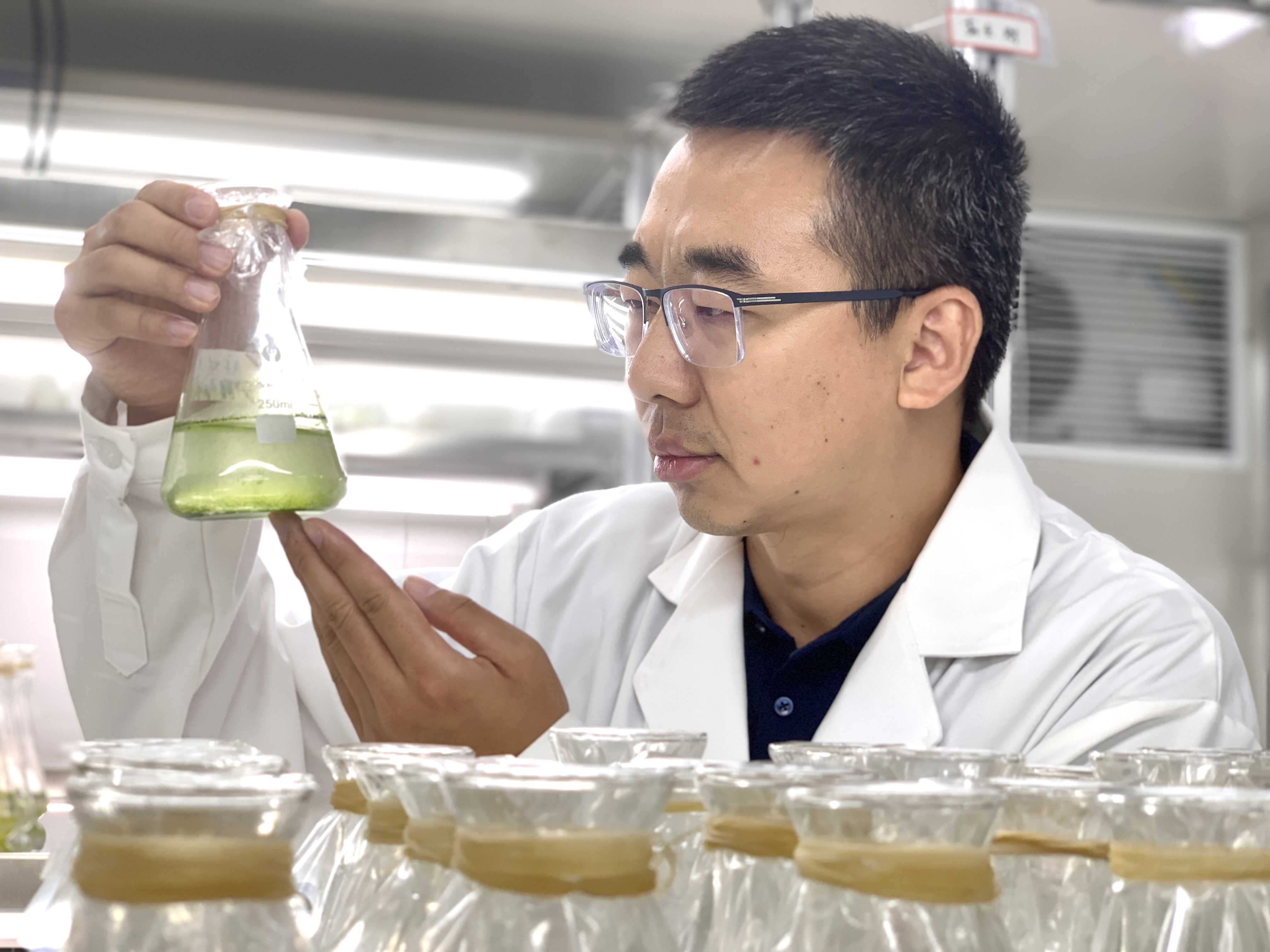
创新奖获奖人 钟伯坚 钟伯坚,生于1984年3月。博士,南京师范大学生命科学学院院长,博士生导师。2007年在中国地质大学(武汉)获学士学位,2010年在复旦大学获硕士学位,2014年在新西兰梅西大学获博士学位,回国后于南京师范大学从事植物学相关研究。2021年获得国家自然科学基金优秀青年科学基金资助、2025年获得国家自然科学基金重点国际(地区)合作研究项目,江苏省“攀登项目”资助。目前担任Journal of Systematics and Evolution和Journal of Molecular Evolution副主编,Journal of Integrative Plant Biology编委,中国植物学会理事、江苏省植物学会副理事长、江苏省植物生理学会常务理事,基金委国家自然科学基金、欧盟研究理事会评审专家。主要通过系统发育、进化基因组学、比较基因组学等手段,围绕绿色植物系统发育关系和植物适应性进化开展一系列研究。相关研究成果以通讯作者(共同通讯)发表在Nat Commun、Curr Biol、Mol Plant、Cell Rep、Mol Biol Evol、JIPB、New Phytol等学术期刊上。 钟伯坚博士主要从事植物系统发育基因组学、植物多样性与适应性进化等研究,在绿藻系统发育关系、早期绿色植物起源演化与地球环境演变、植物适应性机制等方面取得了一系列原创性成果。 1. 绿色植物生命之树 基于重建的绿藻门系统发育关系,厘清了绿藻门主要谱系间的演化关系,揭示了绿藻各谱系间不同细胞类型的起源及演化途径,加深了对绿藻起源演化历史的认识,为研究真核生物复杂性状的演化提供了研究范式。以组学数据为切入点,揭示了被子植物中存在的核质冲突现象,结合化石校准和分子钟分析,阐明被子植物早期复杂的辐射进化历史;将多物种溯祖模型用于重建陆地植物的系统发育框架,证实该模型通过对基因树异质性的有效兼容,可以更好的解析古老类群的演化关系。 2. 绿色植物起源与多样化 基于分子定年方法和化石校准策略两个关键因素,深入解析了绿色植物关键类群的演化时间,将早期绿色植物起源与地球环境变化相结合,揭示了古元古代-中元古代时期海洋表面存在的局部氧气绿洲可能促进了绿藻的起源和早期多样化,推断绿藻的多样化增加了二甲基硫酸盐的排放,进而导致全球气温下降,促进了“雪球地球”的形成,为理解绿藻多样化时空格局演变与全球大气演化提供了重要理论基础。 3. 绿色植物适应性演化机制 以南极衣藻为研究对象,整合基因组学、比较基因组学、功能实验等手段,破译了南极衣藻高质量基因组,揭示了南极衣藻通过改变基因表达模式从而适应极端环境的重要策略。结合数学模型模拟和分子生物学实验,发现光信号核心元件起源于绿藻,阐明光信号与激素信号交互的进化模式。发现了植物无机氮素感知与同化通路的创新伴随着蛋白质的分子修饰和基因组重排。
Zhong Bojian Dr. Bojian Zhong, born in March 1984. PhD supervisor and dean of the School of Life Sciences at Nanjing Normal University. He obtained his bachelor’s degree from China University of Geosciences (Wuhan) in 2007, a master’s degree from Fudan University in 2010, and his PhD from Massey University, New Zealand in 2014. After returning to China, he engaged in research on plant science at Nanjing Normal University. In 2022, he was received the Excellent Young Scientists Fund from the National Natural Science Foundation of China. In 2025, he was supported by Projects of International Cooperation and Exchanges NSFC and the “Climbing Project” of Jiangsu. He currently serves as dean of the School of Life Sciences at Nanjing Normal University, associate editor of journals including the Journal of Systematics and Evolution, Journal of Molecular Evolution, editorial committee of Journal of Integrative Plant Biology, council member of the Botanical Society of China, vice president of the Botanical Society of Jiangsu, standing council member of the Jiangsu Society for Plant Physiology, evaluation expert of the National Natural Science Foundation of China, the European Research Council. He primarily focuses on the phylogeny of green algae and adaptive evolution in plants, employing methods of phylogenetics, evolutionary genomics, and comparative genomics. His findings have been published as corresponding (or co-corresponding) on the international journals including Nat Commun、Curr Biol、Mol Plant、Cell Rep、Mol Biol Evol、JIPB、New Phytol. Dr. Zhong primarily focuses on the plant phylogenetic genomics, plant diversity, and adaptive evolution. He has achieved original findings in the phylogenetic relationships of chlorophytes, the origin and diversification of early Viridiplantae in relation to the environmental changes of the Earth, and the adaptive mechanisms of plants. 1. Viridiplantae tree of life Based on the reconstruction of phylogeny of the Chlorophyta, Dr. Zhong’s group elucidated the evolutionary relationships among its major lineages and revealed the origins and evolutionary history of multicellular across different lineages. This enhances the comprehension of the origination and evolution of green algae, thus establishing a research framework for investigating the evolution of complex traits in eukaryotes. They performed the omics data to reveal the nuclear-cytoplasmic conflicts within the angiosperms. By integrating the fossil calibration and molecular clock analysis, they elucidated the intricate early radiation history of angiosperms. The application of multispecies coalescent model to the reconstruction of phylogenetic framework of land plants has been demonstrated to effectively accommodate gene tree heterogeneity. This approach has been shown to improve the resolution of evolutionary relationships among ancient lineages. 2. Origin and divergence of Viridiplantae To explore the divergence time of key Viridiplantae lineages, his team concentrated on two pivotal factors: molecular dating methods and fossil calibration strategies. It has been hypothesized that localized oxygen oases on the ocean surface during the Paleoproterozoic-Mesoproterozoic may facilitated the origin and early diversification of green algae by combining the emergence of early Viridiplantae and the environmental transformations of Earth. The diversification of green algae led to an increase content of dimethyl sulfate, resulting in the global cooling trend that contributed to the formation of the “Snowball Earth”. This research provided a crucial theoretical foundation for understanding the spatiotemporal evolution of green algae diversification and its relationship with global climate change. 3. Adaptive evolutionary mechanisms of Viridiplantae Dr. Zhong and his team employed genomics, comparative genomics, and functional experiments to elucidate the high-quality genome of Chlamydomonas sp. ICE-L. This finding has revealed the fundamental strategies by which Chlamydomonas sp. ICE-L adapts to extreme environments through the alteration of gene expression patterns. The combination of mathematical modeling and molecular biology experiments suggested that the core components of the light signaling pathway originated in green algae, thereby elucidating the evolutionary pattern of the interaction between light and hormone. They also identified that innovative pathways for inorganic nitrogen sensing and assimilation in plants are accompanied by protein modification and genomic rearrangement. |

版权所有 Copyright © 2015-2019 云南吴征镒科学基金会,All Rights Reserved 【滇ICP备05000394号】
地址:中国云南省昆明市蓝黑路132号 邮政编码:650201
点击这里联系我们