|
创新奖名单
|
第五届(2025年度)
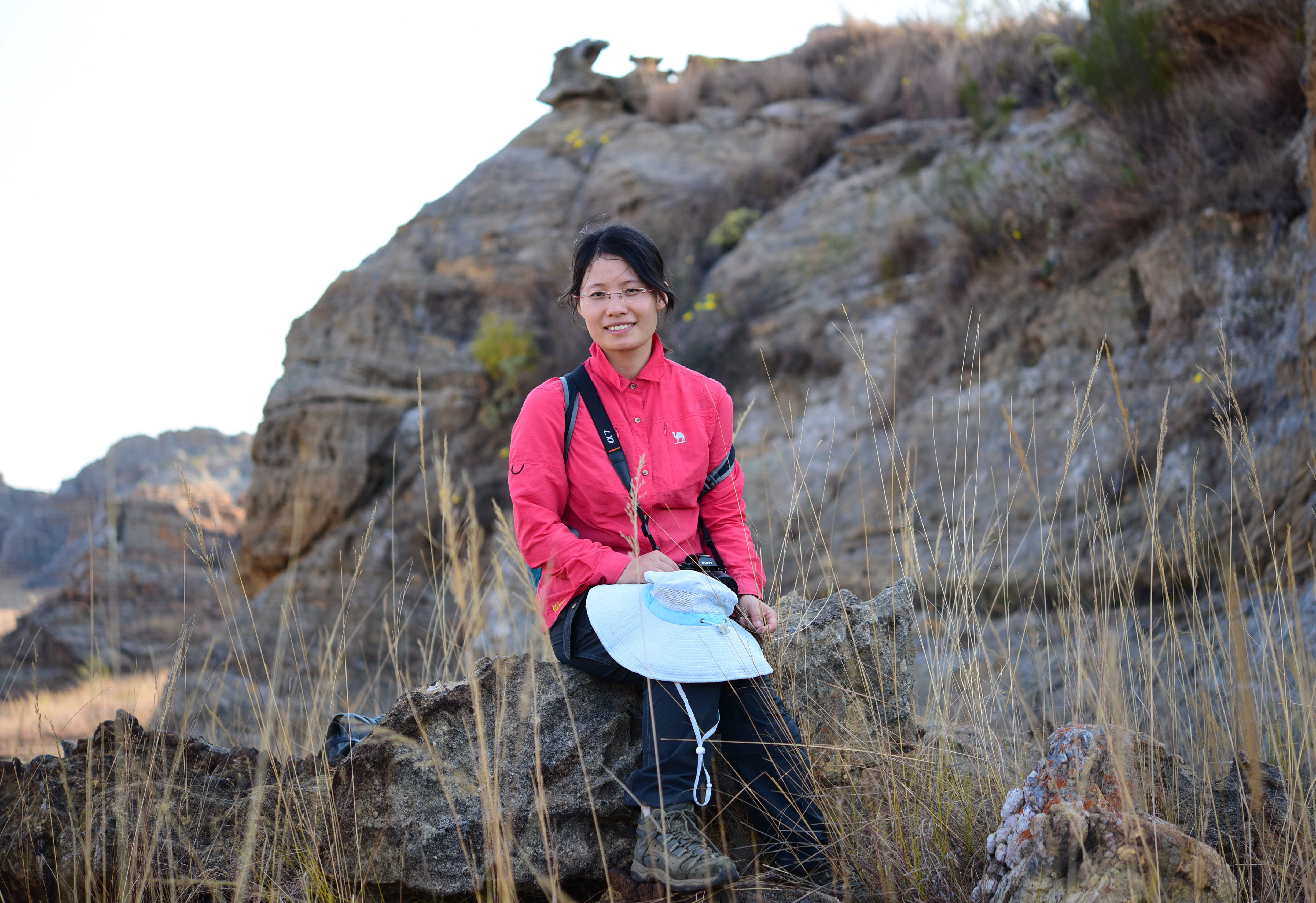
创新奖获奖人 鲁丽敏 鲁丽敏,生于1986年8月。博士,中国科学院植物研究所研究员、博士生导师,系统与进化植物学重点实验室副主任。她于2008年在北京林业大学获学士学位,2014年在中国科学院植物研究所获博士学位并留所工作至今,历任助理研究员、副研究员至研究员。攻读博士学位期间(2010-2012年),她以访问学生身份赴美国史密森研究院国家自然历史博物馆交流;留所工作后,于2015-2016年以访问学者身份赴澳大利亚国家标本馆进行学术交流。她先后获中国科协青年人才托举工程、中国科学院青年创新促进会、国家自然科学基金委优秀青年科学基金等人才项目支持。现任中国植物学会理事,并担任Molecular Phylogenetics and Evolution、Australian Systematic Botany副主编,Journal of Systematics and Evolution、Biological Diversity及《植物资源与环境学报》等期刊编委。 鲁丽敏博士主要从事植物生命之树重建与多样性保护研究,综合植物分类学、进化生物学、生物地理学等多学科手段,在植物多样性时空演化及适应性进化领域取得重要进展。 1. 解析重要资源植物多样化进程与适应性进化机制 聚焦葡萄科植物,开展了深入的整合系统学研究,在10余个国家开展野外科考20余次,采集标本3万余份,发表2新族、2新属、12新种和14个新组合,发现葡萄瓮属在中国的新纪录。基于全球高密度取样,构建了迄今取样最为全面的葡萄科生命之树,结合多样化分析、生境与性状重建以及化石与古气候证据,揭示了该科植物在不同地史时期的多样化进程和生存策略演变;重建地锦属网状进化历史,基于群体重测序数据探讨了喜马拉雅-横断山区物种形成机制;重建乌蔹莓属可靠的生物地理框架,解析了杂交与多倍化事件对物种分布范围的影响。相关成果为资源植物保护与利用提供了科学依据。 2. 揭示中国被子植物时空演化格局、保护空缺与灭绝风险机制 通过重建包含92%中国被子植物属的时间树,结合140多万条空间分布数据,从系统发生角度揭示了中国被子植物时空演化格局。发现中新世是多样性形成的关键时期;中国东部是保存古老类群的“博物馆”,而西部是年轻支系快速分化的“摇篮”;识别出中国被子植物的系统发生多样性热点,建议在东部设立跨省区的自然保护地。进一步整合物种丰富度、特有性、脆弱性、进化历史等指标,识别出42个优先保护地,据此撰写的咨询报告《关于中国国家公园设置和建设的建议》获国家林草局批示。通过评估进化、气候、植被结构、地形及人类影响等因素,揭示了我国被子植物灭绝风险及致危因素的空间异质性。上述成果对进一步完善我国自然保护地体系,制定针对性保护策略具有重要应用价值。 3. 阐明生物多样性热点地区多样性格局并提出了保护方案 通过重建中-美被子植物属水平生命之树,结合300多万条空间分布数据,对两地被子植物的多样性格局进行了对比研究,揭示了中国和美国植物区系的多样性格局与时空差异,进一步强调了我国植物区系的独特性。通过重建涵盖93%属的马达加斯加维管植物生命之树,结合物种分布数据,全面评估了马达加斯加维管植物特有中心的空间异质性,并识别出6个长期被忽视的保护空缺。相关成果对加强我国与北美、非洲生物多样性保护领域的合作具有重要意义。 迄今为止,鲁丽敏作为第一或通讯作者(含共同)在Nature、Nature Plants、Nature Communications、National Science Review、Current Biology等期刊发表论文40余篇,核心成果入选“2018年度中国生命科学十大进展”“国家‘十三五’科技创新成就展”。其研究获国际同行认可,两次在国际植物学大会组织专题研讨会并作学术报告。她参与录制的中国科学院“格致论道”讲坛及《科学公开课》科普报告全网播放量超400万次,有效增进了公众对生物多样性保护和植物资源研究利用的认知。
LU Limin Dr. Li-Min Lu, born in August 1986, is a professor and Ph.D. supervisor at the Institute of Botany, Chinese Academy of Sciences (CAS). She also serves as the Deputy Director of the Key Laboratory of Systematics and Evolutionary Botany. Dr. Lu received her Bachelor's degree from Beijing Forestry University in 2008 and Ph.D. degree from the Institute of Botany, CAS, in 2014. She then continued her academic journey at the same institute, progressing from assistant professor to associate professor, and later to professor. She conducted collaborative research at the National Museum of Natural History, Smithsonian Institution, USA, from 2010 to 2012 and visited the Australian National Herbarium from 2015 to 2016. Dr. Lu has been successively supported by the Young Elite Scientists Sponsorship Program of China Association for Science and Technology, the Youth Innovation Promotion Association of Chinese Academy of Science, and the Excellent Young Scientists Fund of National Natural Science Foundation of China. She currently serves as a Council Member of the Chinese Botanical Society, Associate Editor for Molecular Phylogenetics and Evolution and Australian Systematic Botany, and an Editorial Board Member for Journal of Systematics and Evolution, Biological Diversity, and Journal of Plant Resources and Environment. Dr. Lu’s research focuses on reconstructing the plant tree of life and promoting biodiversity conservation. Her work integrates multidisciplinary approaches, including plant taxonomy, evolutionary biology, and biogeography. She has made significant contributions to understanding the spatiotemporal evolution of plant diversity and elucidating mechanisms of adaptive evolution. 1. Elucidating Diversification and Adaptive Evolution of Resource Plants Focusing on the Vitaceae family, she has conducted in-depth integrative systematic studies, including over 20 field expeditions across more than 10 countries, collecting more than 30,000 specimens. She has described 2 new tribes, 2 new genera, 12 new species, and 14 new combinations, including the first record of the genus Cyphostemma in China. Through comprehensive global sampling, she reconstructed the most complete phylogeny of Vitaceae to date. By integrating diversification analyses, habitat and trait reconstructions, and fossil and paleoclimatic evidence, she revealed the diversification dynamics and shifts in survival strategies of Vitaceae across geological periods. She reconstructed a robust reticulate evolutionary history of Parthenocissus and investigated the mechanisms of speciation in the Himalaya-Hengduan Mountains using population resequencing data. She also established a reliable biogeographic framework for Cayratia, analyzing the impact of hybridization and polyploidization on species distribution ranges. These findings provide a robust scientific foundation for the conservation and sustainable utilization of resource plants. 2. Revealing Spatiotemporal Evolutionary Patterns, Conservation Gaps, and Extinction Risks in Chinese Angiosperms By reconstructing a dated phylogeny encompassing 92% of Chinese angiosperm genera and integrating over 1.4 million spatial distribution records, she revealed the spatiotemporal evolutionary patterns of Chinese angiosperms. Her research identified the Miocene as a pivotal period for diversification, demonstrating that eastern China serves as a “museum” preserving ancient lineages, while western China is a “cradle” for the rapid diversification of younger clades. She identified phylogenetic diversity hotspots for Chinese angiosperms and proposed establishment of cross-provincial natural protected areas in eastern China. Further integrating metrics such as species richness, endemism, vulnerability, and evolutionary history, she identified 42 priority conservation areas. A policy advisory report based on these findings, titled "Suggestions on the Establishment and Construction of China's National Park System," received official feedback from the National Forestry and Grassland Administration. Additionally, through integrative analyses incorporating evolutionary history, climate, vegetation structure, topography, and human impact, she revealed the spatial heterogeneity of extinction risks and their underlying drivers. These insights have significant implications for refining China's protected area network and developing targeted biodiversity conservation strategies. 3. Clarifying Diversity Patterns in Biodiversity Hotspots and Proposing Conservation Strategies She has conducted a comparative study of plant diversity between China and the USA by reconstructing a genus-level tree of life for angiosperms of the two regions, integrating over 3 million spatial distribution records. Her findings revealed significant spatiotemporal differences between the Chinese and American floras, highlighting the unique characteristics of China’s plant diversity. Furthermore, by reconstructing a phylogeny covering 93% of vascular plant genera in Madagascar and combining species distribution data, she comprehensively assessed the spatial heterogeneity of endemic centers and identified previously overlooked conservation gaps. These findings provide critical insights for strengthening international biodiversity conservation collaboration between China, North America, and Africa. Dr. Lu has published over 40 papers in scientific journals, including Nature, Nature Plants, Nature Communications, National Science Review, Current Biology, as the first or corresponding author. Her work was recognized among the “Top 10 Scientific Advances in Life Sciences in China” (2018) and featured at the “National 13th Five-Year Scientific and Technological Innovation Achievement Exhibition”. Dr. Lu’s research is recognized internationally. She has organized symposia and presented her findings at the 19th and 20th International Botanical Congresses. Additionally, her popular science lectures, recorded for the CAS “Gezhi Talk” program and the “Science Open Course”, have attracted widespread attention, garnering over 4 million views, effectively enhancing public awareness of biodiversity conservation and the sustainable use of plant resources.
|

版权所有 Copyright © 2015-2019 云南吴征镒科学基金会,All Rights Reserved 【滇ICP备05000394号】
地址:中国云南省昆明市蓝黑路132号 邮政编码:650201
点击这里联系我们